
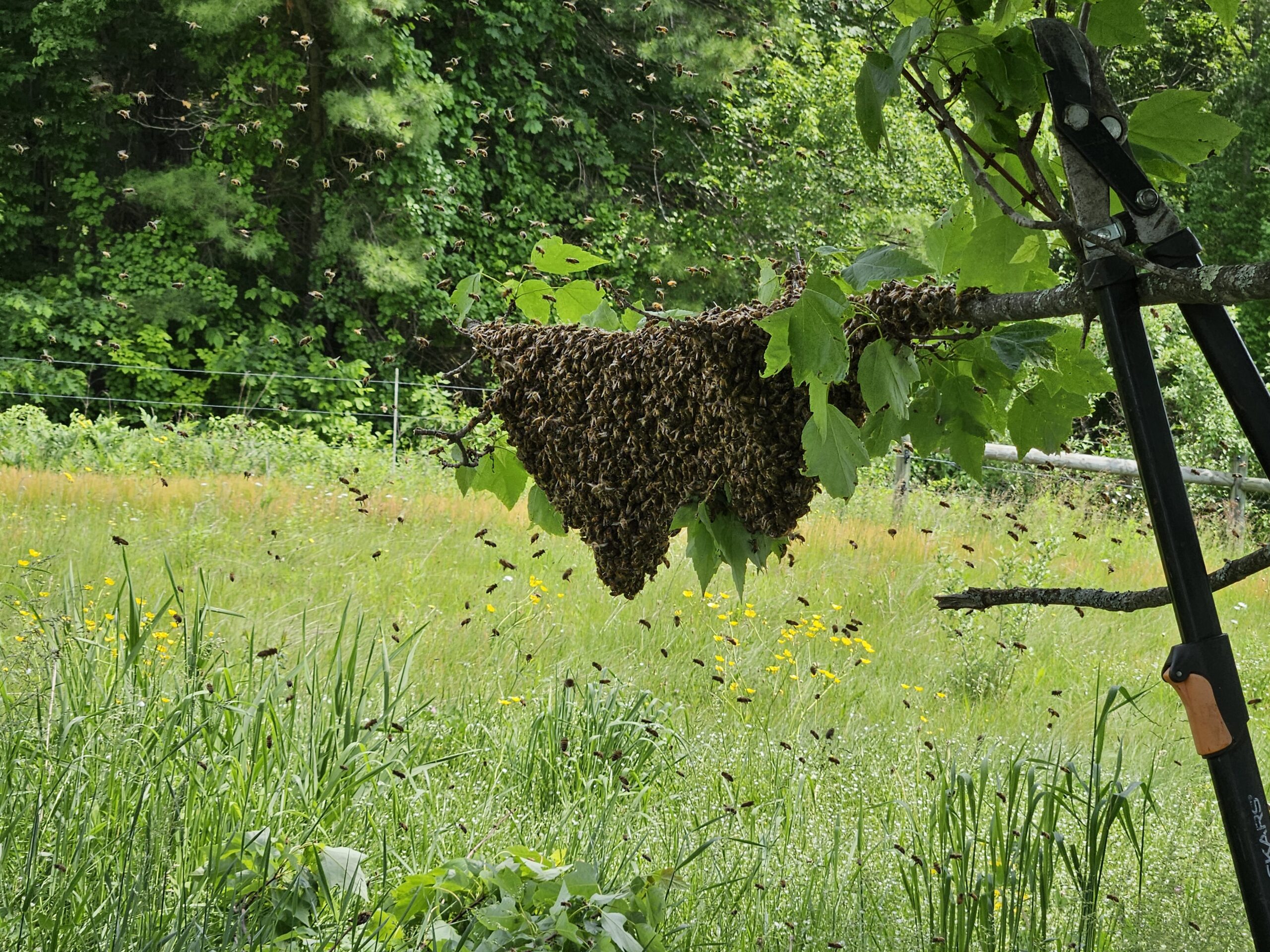
July in the north-northeast usually has a steady nectar flow. Sumac and basswood trees are coming into bloom along with clover, milkweed and a whole host of wildflowers. See Pollinator Plants for Northern New England, UNH
Supers Make sure your colonies have room to both evaporate nectar and store honey! Error on the side of more vs less room so the heat of summer can encourage them to spread out inside the hive if they can, rather than beard outside.
Inspections: Keep an eye on colonies that have swarmed and make sure they get back up on their collective busy little feet! Inspect for success! Pollen should be coming in as a good sign the new queen is mated, laying, and accepted. And as in June….
Food: What are your bees finding to eat in your yard? Is anything in bloom? Visit a nursery and see what bees are on and plant good things for them to eat all season long. Bee careful of toxic-to-bees flowering plants grown from coated seeds or in chemical fertilizers, plant foods, etc. (which unfortunately are most of the plants on display in area markets – ask at the nursery). At the very least grow buckwheat in pots or raised beds – grows fast and is highly nutritious.
In hot and humid weather, it’s not unusual for bees to hang out on the front porch, clinging to the hive. This is called “bearding” and it’s normal. They’re simply cooling off. Open up the entrance reducer when the bees appear congested at the entrance, but not when robbing behaviors are present: bees sniffing around the seams in hive boxes, etc.
Water: If you don’t have a nearby source of water, make sure you provide one. Bees use water to cool off the hive. Whatever you use, the bees should have something to stand on so they don’t drown. Small rocks in a shallow pie plate work well.
Leave a Reply
You must be logged in to post a comment.